EN
EN

The transition from repair welding to fabrication work represents one of the most significant performance scaling challenges in industrial welding operations. When a welder moves from the precise, limited-scope nature of repair tasks to the high-volume, consistency-demanding world of fabrication, their performance metrics undergo dramatic changes that directly impact productivity, quality, and operational efficiency. Understanding these performance scaling dynamics is crucial for welding managers, production supervisors, and operations directors who need to optimize workforce deployment and equipment utilization across different welding applications.
The performance scaling relationship between repair and fabrication welding is not linear, and the factors that contribute to welder effectiveness in each domain often operate under entirely different principles. While repair work demands diagnostic thinking, precision adaptability, and problem-solving skills applied to unique scenarios, fabrication work requires speed consistency, repetitive accuracy, and systematic workflow optimization. A skilled repair welder may find their performance initially decreases when transitioning to fabrication due to these fundamental differences in operational requirements, even though both applications involve the same core welding processes.
Performance Metrics Transformation from Repair to Fabrication
Speed and Throughput Requirements
In repair welding scenarios, a welder typically works on individual components or localized damage areas where speed is secondary to precision and problem resolution. The performance expectation centers on successfully restoring functionality rather than achieving high deposition rates. However, when the same welder transitions to fabrication environments, speed becomes a primary performance indicator. Fabrication operations demand consistent travel speeds, optimal deposition rates, and minimal setup time between joints.
The scaling challenge emerges because repair work often involves irregular joint geometries, varying material thicknesses, and unpredictable access limitations that train a welder to work methodically rather than rapidly. In fabrication, the welder must adapt to standardized joint preparations, consistent material specifications, and repetitive welding sequences that reward speed optimization. This transition typically results in an initial performance dip as the welder recalibrates their working rhythm and technique prioritization.
Throughput expectations in fabrication environments often require a welder to complete 2-3 times more linear feet of welding per shift compared to repair work. This scaling demands not only faster travel speeds but also more efficient inter-pass cleaning, faster electrode changes, and reduced inspection time per joint. The welder must develop new muscle memory patterns that prioritize continuous arc time over the stop-and-assess approach common in repair applications.
Quality Consistency Standards
Repair welding quality focuses on achieving adequate strength restoration and corrosion resistance for the specific damaged area, often accepting some cosmetic imperfections if structural integrity is maintained. The quality assessment is typically pass/fail based on whether the repair successfully restores component functionality. Fabrication quality standards operate under different principles, requiring consistent visual appearance, uniform penetration profiles, and standardized defect tolerances across hundreds or thousands of similar joints.
When a welder scales from repair to fabrication, they must adjust their quality control mindset from problem-specific solutions to systematic consistency. This means developing the ability to produce identical bead profiles, consistent heat input, and uniform travel speeds across extended welding sequences. The challenge intensifies because fabrication quality standards are often more stringent in terms of visual acceptability and dimensional accuracy, even though the structural demands may be less complex than some repair scenarios.
The welder must also adapt to quality documentation requirements that are typically more extensive in fabrication environments. While repair work might require simple before/after documentation, fabrication operations often demand detailed weld maps, parameter logging, and systematic non-destructive testing integration. This administrative scaling adds complexity to the performance transition that extends beyond the physical welding process.
Technical Skill Adaptation and Equipment Utilization
Process Parameter Optimization
Repair welding often requires a welder to continuously adjust parameters based on real-time assessment of joint conditions, material variations, and access constraints. The welder develops strong intuitive parameter selection skills but may become accustomed to frequent adjustments and non-standard settings. Fabrication work demands the opposite approach: establishing optimal parameters for standardized conditions and maintaining those settings with minimal variation to ensure consistency across production runs.
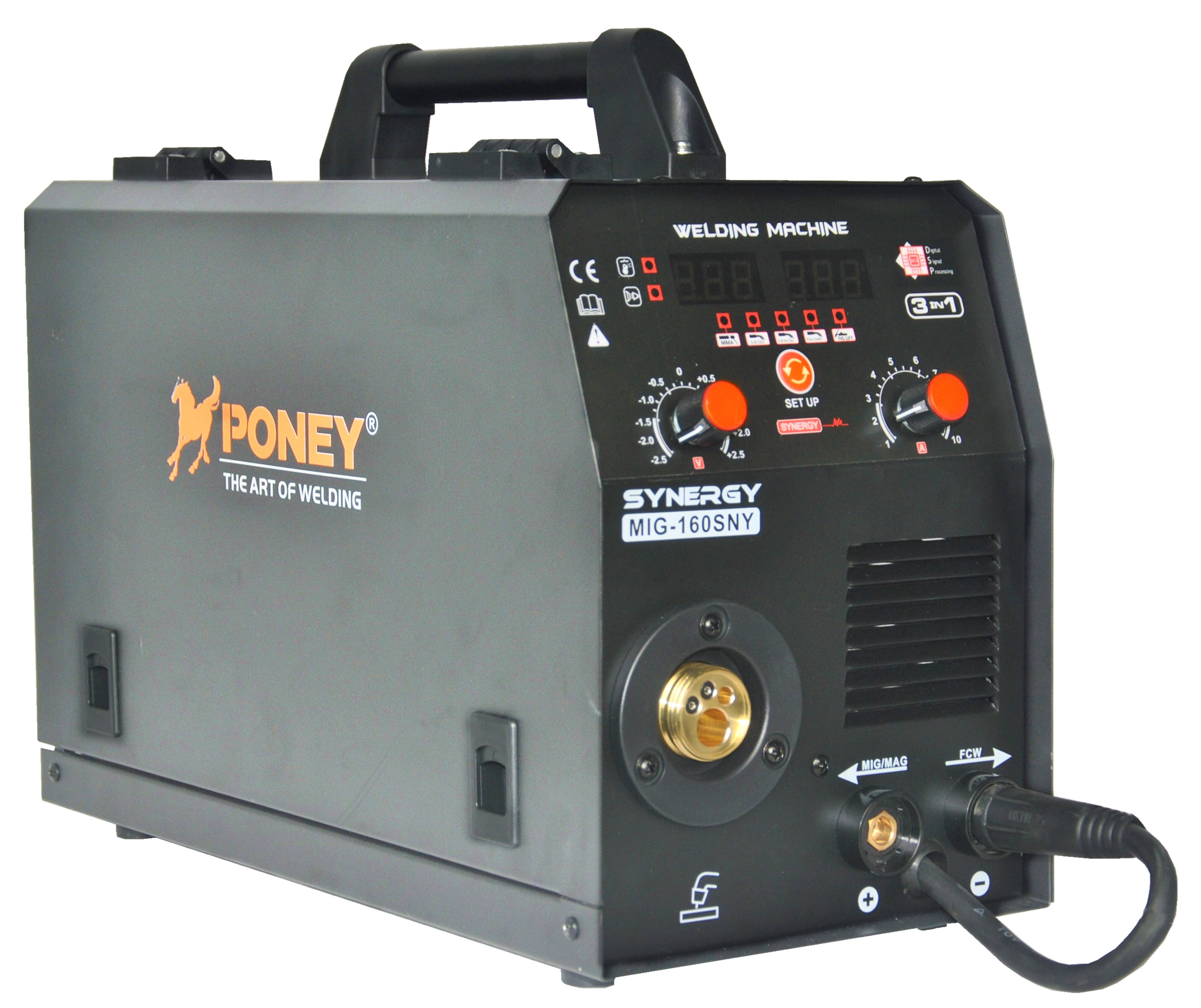
The parameter optimization challenge becomes particularly evident when transitioning to advanced welder systems designed for fabrication environments. These systems often feature synergic controls, pulse timing optimization, and automated parameter adjustment capabilities that require the welder to think in terms of program selection rather than manual parameter manipulation. The scaling challenge involves learning to trust and optimize these automated systems rather than relying on manual control habits developed during repair work.
Fabrication environments also typically involve longer arc-on times and higher duty cycle requirements that demand different heat management strategies. A welder accustomed to the intermittent nature of repair work must adapt to sustained welding sequences that require different breathing techniques, body positioning, and heat dissipation management. This physical performance scaling often requires several weeks of adaptation to achieve optimal productivity levels.
Material Handling and Workflow Integration
Repair welding typically involves working on components in their installed positions or on specialized repair fixtures that accommodate irregular geometries. The welder develops skills in awkward position welding, complex joint access, and improvised fixturing solutions. Fabrication work operates under different material handling principles, utilizing standardized fixtures, optimized joint accessibility, and systematic workflow sequences that prioritize efficiency over problem-solving flexibility.
The workflow integration scaling challenge requires the welder to adapt from independent problem-solving to coordinated team production. In repair scenarios, the welder often works autonomously, making real-time decisions about sequence, approach, and completion criteria. Fabrication environments require integration with upstream preparation processes, downstream finishing operations, and quality control systems that operate on standardized timing and handoff protocols.
Material handling efficiency becomes critical in fabrication scaling, where the welder must minimize non-productive time through optimized component positioning, efficient consumable management, and coordinated equipment setup. This requires developing new habits around preparation thoroughness, workspace organization, and predictive maintenance that may not have been priorities in repair-focused work environments.
Productivity Scaling Factors and Performance Predictors
Learning Curve Dynamics
The performance scaling curve from repair to fabrication typically follows a predictable pattern but varies significantly based on individual welder characteristics and organizational support systems. Initial performance often decreases by 15-25% during the first 2-4 weeks as the welder adapts to new rhythm requirements, quality standards, and workflow integration demands. This initial dip occurs even among highly skilled repair welders because the performance optimization criteria are fundamentally different.
Recovery to baseline performance levels typically occurs within 4-8 weeks, followed by continued improvement as the welder develops fabrication-specific optimization skills. The ultimate performance scaling potential often exceeds original repair work productivity by 40-60% when measured in terms of completed joint feet per hour, though this comparison requires careful consideration of complexity differences between the two application types.
Successful scaling predictors include adaptability to systematic workflows, comfort with repetitive precision tasks, and willingness to optimize technique for speed rather than problem-solving flexibility. Welders who demonstrate strong parameter discipline and consistent technique application typically achieve faster scaling transitions than those who prefer intuitive, situation-specific approaches that excel in repair environments but limit fabrication productivity.
Equipment and Technology Leverage
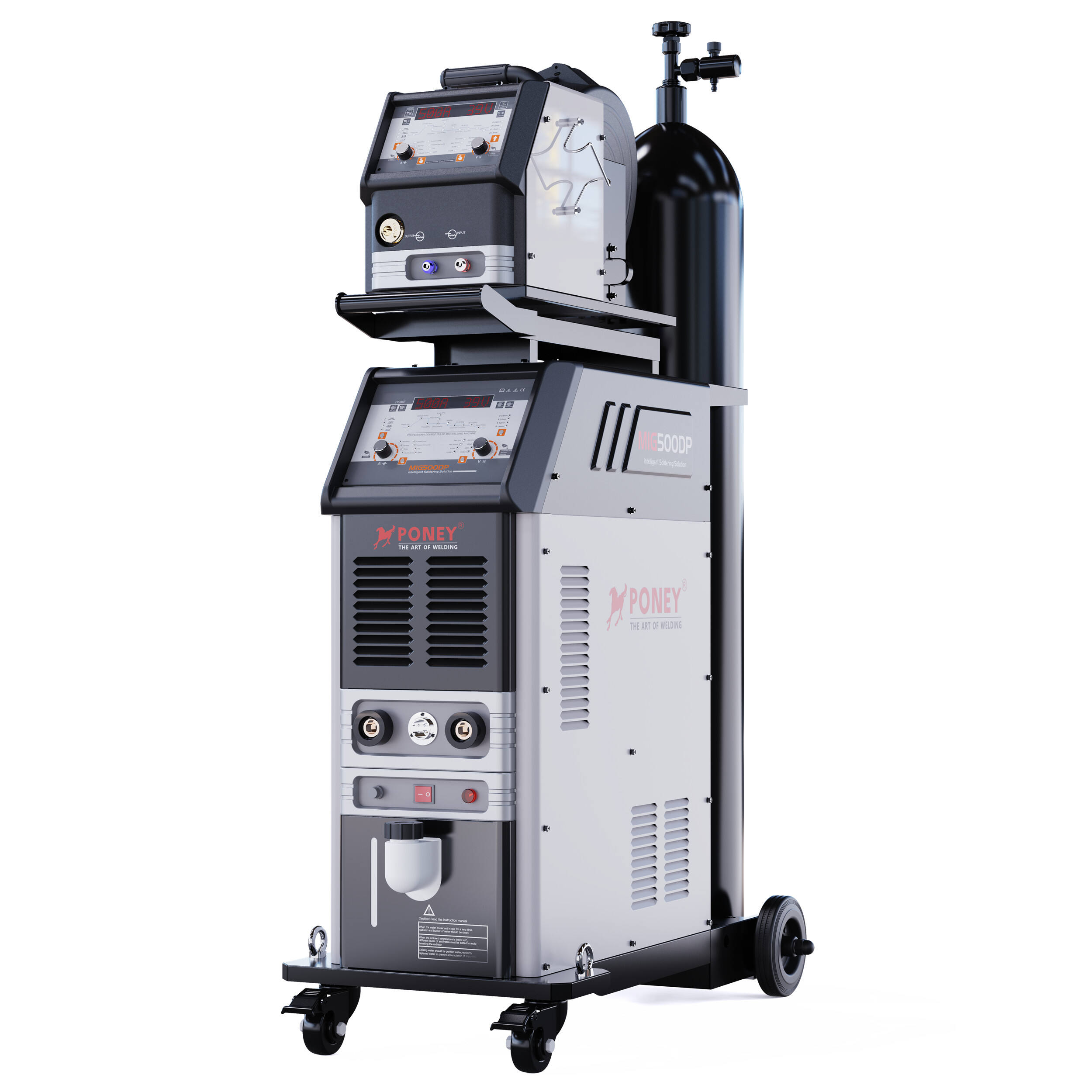
Fabrication environments typically provide access to more advanced welding equipment, automated positioning systems, and productivity enhancement technologies that can significantly amplify welder performance when properly utilized. However, repair-experienced welders may initially under-utilize these capabilities because their skill development focused on manual adaptability rather than technology optimization.
The scaling advantage emerges when welders learn to leverage automated features like synergic parameter control, pulse timing optimization, and integrated wire feeding systems that reduce setup time and improve consistency. Advanced fabrication welding systems often include productivity monitoring capabilities that provide real-time feedback on travel speed, arc-on time, and deposition efficiency that help accelerate the performance optimization learning curve.
Technology adaptation success correlates strongly with the welder's willingness to trust automated systems rather than relying exclusively on manual control preferences developed during repair work. Welders who embrace the systematic optimization capabilities of fabrication equipment typically achieve 20-30% higher productivity scaling than those who attempt to apply repair-work manual control approaches in fabrication environments.
Operational Integration and Performance Sustainability
Quality System Integration
Fabrication environments typically operate under more structured quality management systems that require systematic documentation, traceability, and compliance verification that differs significantly from repair work quality approaches. The welder must adapt to standardized inspection protocols, detailed record-keeping requirements, and systematic non-destructive testing integration that becomes part of their daily productivity metrics.
Performance scaling success depends heavily on the welder's ability to integrate quality compliance activities into their workflow efficiency rather than treating them as separate, time-consuming tasks. This integration requires developing new habits around documentation timing, inspection preparation, and corrective action response that become automatic rather than disruptive to production rhythm.
The quality system adaptation also involves learning to work within statistical process control frameworks that monitor consistency trends and flag performance variations before they become quality issues. Repair welders often excel at problem identification and correction but may need to develop new skills in preventive consistency management that fabrication quality systems require.
Production Planning and Resource Optimization
Fabrication performance scaling requires welders to think systematically about resource utilization, including consumable efficiency, equipment uptime optimization, and coordinated scheduling with other production processes. This represents a significant shift from repair work, where resource optimization typically focuses on minimizing total repair time rather than maximizing systematic throughput.
Successful scaling involves developing awareness of upstream and downstream process dependencies that affect welding productivity. The welder must learn to communicate effectively with material handlers, quality inspectors, and production coordinators to maintain optimal workflow continuity that maximizes their productive welding time while meeting overall production schedule requirements.
Long-term performance sustainability requires the welder to develop continuous improvement mindset focused on incremental optimization rather than the problem-solving breakthrough approach that characterizes successful repair work. This involves systematic analysis of productivity bottlenecks, consistent implementation of proven techniques, and collaborative participation in process improvement initiatives that enhance overall fabrication efficiency.
FAQ
How long does it typically take for a repair welder to reach full productivity in fabrication work?
Most repair welders require 6-12 weeks to reach full fabrication productivity, depending on their adaptability and the complexity of the fabrication processes. The initial 2-4 weeks often show decreased performance as welders adjust to different quality standards and workflow requirements, followed by steady improvement. Welders with strong systematic thinking and consistency skills typically adapt faster than those who prefer intuitive, problem-solving approaches.
What are the main challenges repair welders face when transitioning to fabrication environments?
The primary challenges include adapting from precision problem-solving to speed consistency, learning to work within systematic quality management frameworks, and adjusting to repetitive workflow patterns rather than unique problem scenarios. Many repair welders also struggle with trusting automated welding system features and integrating with team-based production schedules after working independently in repair applications.
Can fabrication experience help welders perform better in repair applications?
Fabrication experience provides valuable benefits for repair work, including improved speed and efficiency, better parameter control consistency, and enhanced quality documentation skills. However, fabrication-trained welders may need to develop stronger diagnostic thinking and adaptability skills that are essential for complex repair scenarios. The ideal welder has experience in both applications to understand the performance scaling dynamics in either direction.
What equipment differences should welders expect when moving from repair to fabrication work?
Fabrication environments typically feature more advanced welding systems with synergic controls, automated parameter adjustment, and productivity monitoring capabilities. These systems are designed for consistency and speed rather than the flexibility and manual control that characterize many repair welding setups. Welders must learn to leverage these automated features effectively while adapting to different material handling systems and workflow integration requirements that support high-volume production operations.
Table of Contents
- Performance Metrics Transformation from Repair to Fabrication
- Technical Skill Adaptation and Equipment Utilization
- Productivity Scaling Factors and Performance Predictors
- Operational Integration and Performance Sustainability
-
FAQ
- How long does it typically take for a repair welder to reach full productivity in fabrication work?
- What are the main challenges repair welders face when transitioning to fabrication environments?
- Can fabrication experience help welders perform better in repair applications?
- What equipment differences should welders expect when moving from repair to fabrication work?