EN
EN

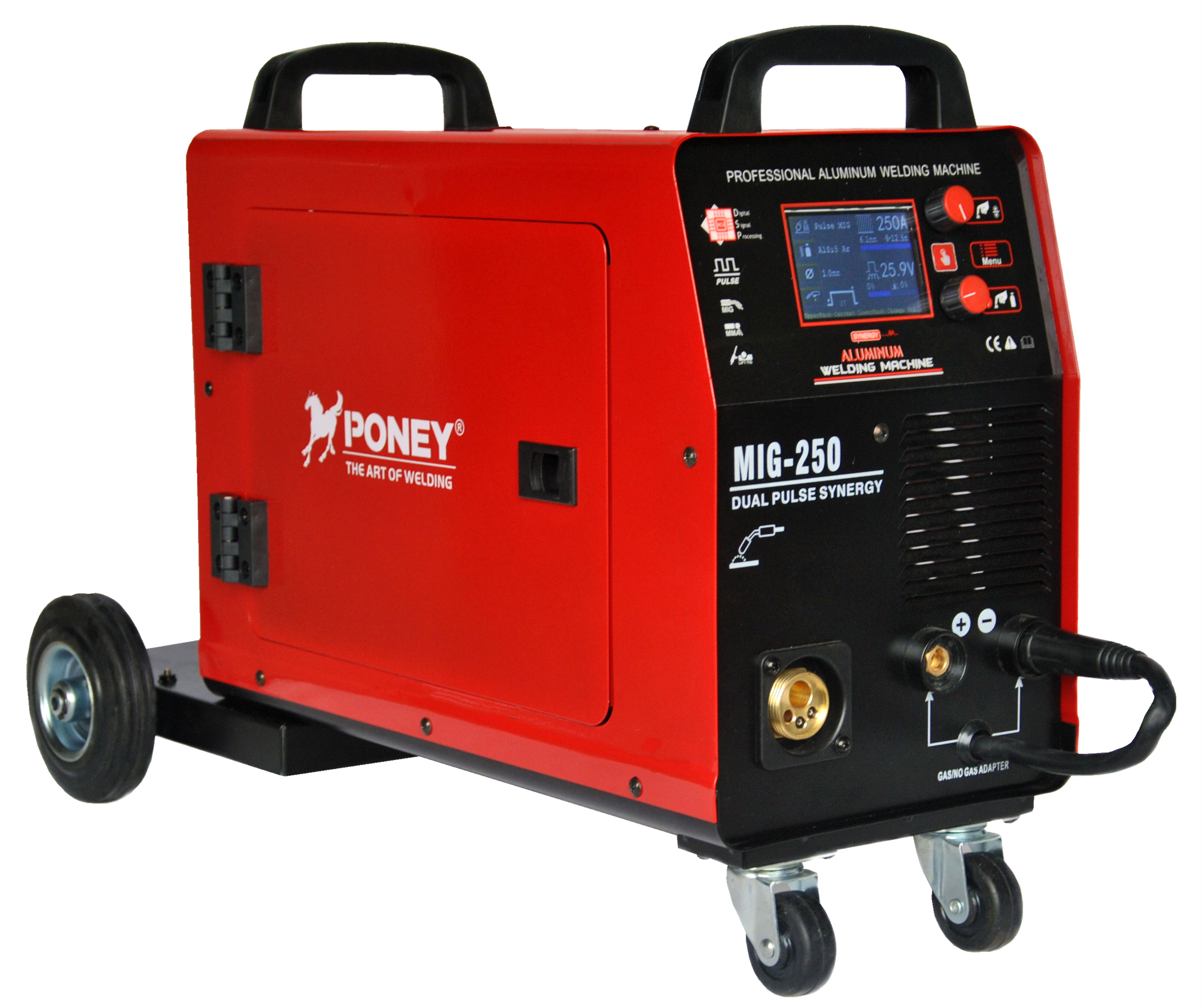
Selecting a welder for mixed material applications presents unique challenges that demand careful consideration of multiple technical factors. Unlike single-material welding scenarios where equipment selection follows established patterns, mixed material environments require welders capable of adapting to diverse substrates, varying thicknesses, and incompatible metallurgical properties. These applications often involve combining dissimilar metals such as steel with aluminum, stainless steel with carbon steel, or ferrous materials with non-ferrous alloys, each presenting distinct welding characteristics and process requirements.
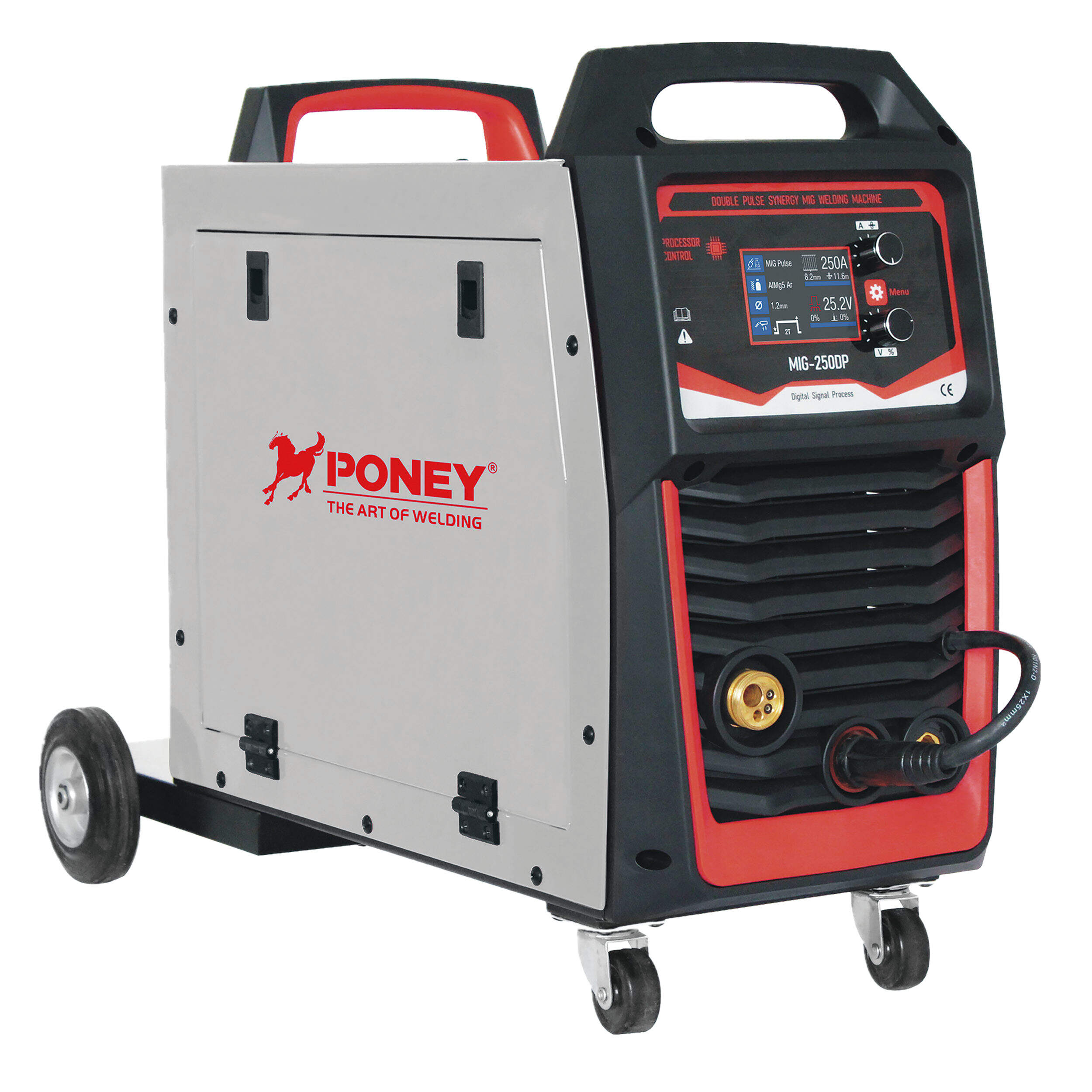
The complexity of mixed material welding extends beyond simple equipment capability to encompass process control, consumable selection, and metallurgical compatibility considerations. A welder suitable for mixed material applications must demonstrate versatility in process selection, precise parameter adjustment capabilities, and consistent performance across varying material combinations. Understanding these challenges becomes critical for professionals tasked with equipment selection in fabrication shops, manufacturing facilities, and repair operations where material diversity is common.
Material Compatibility and Metallurgical Challenges
Thermal Expansion Coefficient Variations
Different materials exhibit varying rates of thermal expansion and contraction during the welding process, creating significant stress concentrations at joint interfaces. When a welder operates on materials with mismatched expansion coefficients, such as aluminum and steel, the resulting thermal stresses can lead to cracking, distortion, and joint failure. The welder must provide precise heat control and potentially specialized techniques like pulsed welding to manage these thermal gradients effectively.
Advanced welders designed for mixed material applications incorporate thermal management features such as adjustable pulse parameters, heat input control, and cooling cycle optimization. These capabilities allow operators to minimize thermal stress accumulation while maintaining adequate penetration and fusion characteristics. The challenge lies in selecting a welder with sufficient parameter range and control granularity to accommodate the thermal behavior of all intended material combinations.
Metallurgical Incompatibility Issues
Certain material combinations create inherent metallurgical incompatibilities that affect joint integrity and long-term performance. When welding dissimilar metals, the formation of intermetallic compounds can result in brittle zones that compromise structural integrity. A welder intended for mixed material applications must enable process modifications such as specific travel speeds, heat input adjustments, and consumable selection strategies to minimize these metallurgical challenges.
The selection process must consider the welder's ability to support transitional welding techniques, where intermediate materials or specialized consumables bridge the metallurgical gap between dissimilar base materials. This requirement often necessitates multi-process capability within a single welder platform, allowing operators to switch between MIG, TIG, and stick processes as material combinations demand.
Process Versatility and Equipment Adaptation Requirements
Multi-Process Capability Demands
Mixed material applications frequently require different welding processes for optimal results on various material combinations. A single project might demand MIG welding for thick steel sections, TIG welding for precision aluminum joints, and stick welding for field repairs on cast iron components. The challenge becomes selecting a welder that provides genuine multi-process capability rather than compromise performance across all processes.
Quality multi-process welders must deliver process-specific performance characteristics rather than generic functionality. For mixed material applications, this means maintaining arc stability across different processes, providing appropriate power delivery characteristics for each welding method, and supporting the full range of consumables required for diverse material combinations. The welder selection must balance process versatility with individual process excellence.
Parameter Range and Adjustment Precision
Mixed material welding demands precise parameter control to accommodate the varying requirements of different material combinations within a single project. The welder must provide sufficient amperage range to handle thin-gauge materials without burn-through while maintaining adequate penetration capability for thick sections. Voltage adjustment precision becomes critical when transitioning between materials with different arc characteristics and wetting behaviors.
Modern digital welders offer programmable parameter sets and synergic control systems that simplify material transitions while maintaining optimization for each specific combination. The challenge lies in selecting equipment with sufficient programming flexibility and parameter resolution to address the full spectrum of anticipated material combinations without sacrificing ease of use or operational efficiency.
Consumable Selection and Inventory Management Challenges
Filler Material Compatibility Matrix
Each material combination in mixed applications requires specific filler materials designed to bridge the metallurgical and physical property differences between base materials. The welder selection must consider compatibility with the full range of required consumables, including specialized alloys for dissimilar metal joining, transition materials for problematic combinations, and backing materials for specific joint configurations.
The complexity of maintaining appropriate filler material inventory increases exponentially with material diversity. Each unique combination may require specific wire types, electrode classifications, or specialized consumables that must be readily available and properly stored. The welder must accommodate these diverse consumable requirements without compromising feed reliability or arc characteristics across the full range of materials.
Shielding Gas Strategy Complications
Different materials require specific shielding gas compositions for optimal weld quality and mechanical properties. Mixed material applications often demand gas switching capabilities or blended gas solutions that provide acceptable performance across multiple material types. The welder selection must consider gas delivery system compatibility, flow control precision, and the ability to accommodate multiple gas sources or blended gas systems.
Some mixed material applications benefit from adaptive shielding strategies where gas composition varies during the welding process or between different joint preparations. Advanced welders may incorporate programmable gas control systems that automatically adjust shielding parameters based on selected material combinations, reducing operator complexity while maintaining weld quality consistency.
Operational Complexity and Training Considerations
Skill Requirement Escalation
Mixed material welding demands significantly higher operator skill levels compared to single-material applications. The welder selection must consider not only equipment capability but also the learning curve and training requirements associated with complex parameter optimization. Equipment with intuitive controls and guidance systems can reduce the skill barrier while maintaining process flexibility for advanced applications.
The challenge extends beyond basic operation to include troubleshooting capabilities when unexpected material combinations or joint configurations arise. A suitable welder should provide diagnostic feedback and parameter recommendations that assist operators in achieving consistent results across diverse material combinations without extensive trial-and-error adjustment periods.
Quality Control and Documentation Demands
Mixed material applications often require enhanced quality control measures and welding parameter documentation for traceability and certification purposes. The welder must support data logging capabilities, parameter verification systems, and integration with quality management systems that track welding conditions for each material combination and joint configuration.
Advanced welders incorporate memory systems that store proven parameter sets for specific material combinations, reducing setup time and improving consistency while maintaining detailed records of welding conditions. This capability becomes essential when working with certified applications where parameter deviation can compromise qualification status or structural integrity requirements.
Cost-Benefit Analysis and Return on Investment Factors
Initial Investment Versus Capability Range
Multi-capability welders suitable for mixed material applications typically command premium pricing compared to single-process or limited-capability alternatives. The selection challenge involves balancing initial investment against the breadth of applications the welder can address effectively. Cost justification becomes complex when considering the avoided expense of multiple specialized machines versus the potential performance compromises of a versatile platform.
The analysis must include considerations of space utilization, operator training consolidation, and inventory simplification benefits that offset higher initial equipment costs. A properly selected welder for mixed materials should demonstrate clear economic advantage through reduced equipment count, simplified maintenance requirements, and improved operational flexibility over specialized single-purpose alternatives.
Long-Term Operational Cost Implications
Mixed material welding applications often involve higher consumable costs due to specialized filler materials and more complex shielding gas requirements. The welder selection must consider long-term operational efficiency, including consumable utilization optimization, energy efficiency across diverse processes, and maintenance complexity associated with multi-process capability.
Consideration must be given to the total cost of ownership including service support availability, spare parts inventory requirements, and the potential for technology obsolescence in rapidly evolving mixed material applications. The selected welder should provide a clear path for capability expansion and technology updates as material combinations and application requirements evolve over the equipment's service life.
FAQ
What makes a welder suitable for mixed material applications different from standard welding equipment?
A welder designed for mixed material applications features enhanced parameter control range, multi-process capability, and specialized functions like pulse welding and synergic control systems. These welders provide precise heat input management, broader amperage and voltage ranges, and compatibility with diverse consumable types required for welding dissimilar metals effectively.
How do thermal expansion differences between materials affect welder selection?
Materials with different thermal expansion coefficients create stress concentrations during welding that can cause cracking and distortion. The welder must provide precise heat control features such as pulsed welding capability, adjustable heat input parameters, and thermal cycle optimization to manage these stresses while maintaining adequate joint penetration and strength.
Can a single welder effectively handle all mixed material combinations?
While advanced multi-process welders can handle many mixed material combinations, some extremely challenging combinations may require specialized equipment or techniques. The key is selecting a welder with sufficient versatility and parameter control to address the majority of anticipated applications while recognizing that highly specialized combinations might require additional equipment or outsourcing.
What training considerations are important when implementing a welder for mixed material applications?
Mixed material welding requires operators to understand metallurgical compatibility, parameter optimization for different material combinations, and quality control requirements. Training should cover material identification, appropriate consumable selection, parameter adjustment techniques, and troubleshooting methods specific to the challenges of welding dissimilar metals effectively.
Table of Contents
- Material Compatibility and Metallurgical Challenges
- Process Versatility and Equipment Adaptation Requirements
- Consumable Selection and Inventory Management Challenges
- Operational Complexity and Training Considerations
- Cost-Benefit Analysis and Return on Investment Factors
-
FAQ
- What makes a welder suitable for mixed material applications different from standard welding equipment?
- How do thermal expansion differences between materials affect welder selection?
- Can a single welder effectively handle all mixed material combinations?
- What training considerations are important when implementing a welder for mixed material applications?