EN
EN

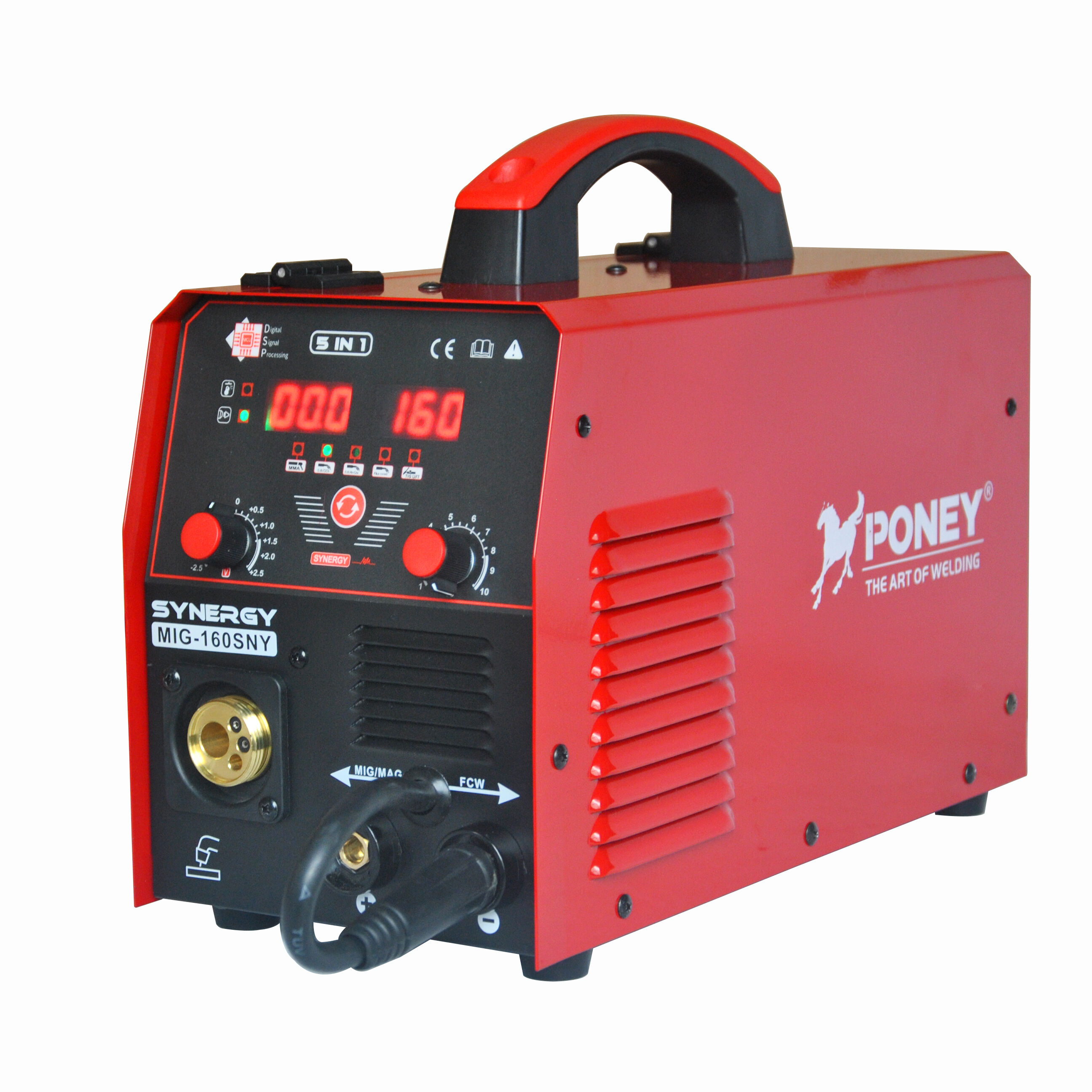
Parameter tuning in mig welder operations represents one of the most critical factors determining productivity outcomes in modern metal fabrication environments. When welders understand how voltage, amperage, wire feed speed, and gas flow settings interact with different materials and joint configurations, they can achieve significantly higher production rates while maintaining consistent weld quality. The relationship between precise mig welder parameter control and fabrication efficiency extends far beyond simple speed improvements, encompassing reduced rework rates, minimized material waste, and enhanced overall operational throughput.
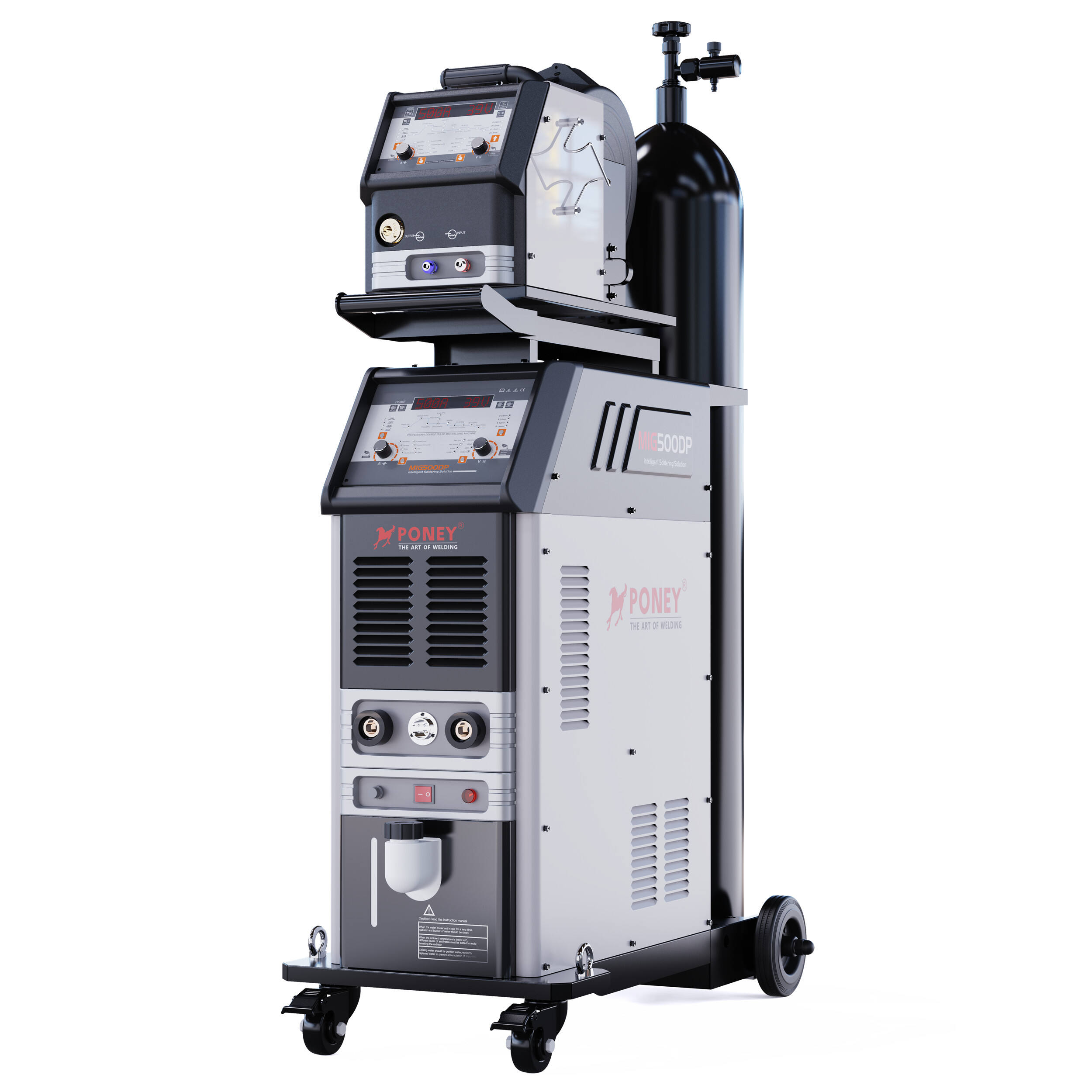
The impact of optimal mig welder parameter tuning on productivity manifests through multiple interconnected mechanisms that directly influence fabrication cycle times and quality consistency. Modern metal fabrication facilities that implement systematic parameter optimization protocols typically experience productivity gains ranging from 15% to 40%, depending on the complexity of their welding applications and the precision of their tuning methodologies. Understanding these productivity relationships requires examining how each parameter adjustment affects deposition rates, penetration characteristics, and the overall welding process stability that drives consistent production outcomes.
Fundamental Parameter Relationships in Mig Welder Productivity
Voltage and Arc Characteristics Impact on Speed
Voltage settings in mig welder applications directly control arc length and penetration characteristics, which significantly influence both welding speed and quality consistency. When voltage levels are optimized for specific material thicknesses and joint configurations, welders can maintain higher travel speeds while achieving proper penetration depths. Too low voltage settings force welders to reduce travel speeds to ensure adequate fusion, while excessive voltage creates unstable arcs that require frequent stops for quality corrections.
The relationship between voltage and productivity becomes particularly evident in high-volume fabrication scenarios where consistent arc characteristics enable automated or semi-automated welding processes. Mig welder systems with precise voltage control allow fabricators to establish repeatable parameter sets that maintain consistent deposition rates across multiple shifts and operators. This consistency translates directly into predictable production scheduling and reduced quality variation that might otherwise require time-consuming rework cycles.
Current and Wire Feed Speed Optimization
Current settings and wire feed speed parameters work together to determine deposition rates and penetration characteristics that directly affect fabrication productivity. Higher current levels generally enable increased wire feed speeds, which result in faster deposition rates and higher travel speeds for appropriate joint configurations. However, the relationship between these parameters requires careful optimization to prevent excessive spatter generation or inadequate penetration that could compromise weld integrity and require corrective work.
Productivity gains from current and wire feed speed optimization become most apparent in repetitive welding applications where consistent parameter settings enable rhythm development and muscle memory formation. Experienced mig welder operators working with properly tuned equipment can achieve deposition rates that are 25% to 35% higher than those using default or poorly adjusted parameter settings, particularly when working with familiar material combinations and joint geometries.
Gas Flow Rate and Coverage Efficiency
Shielding gas flow rates significantly impact both weld quality and welding speed, creating direct productivity implications through their effect on porosity prevention and post-weld cleanup requirements. Optimal gas flow rates ensure complete atmospheric protection without creating turbulence that might compromise arc stability or increase spatter generation. Inadequate gas flow forces slower travel speeds to compensate for marginal shielding, while excessive flow rates waste consumables and may create drafting issues that affect arc characteristics.
The productivity impact of proper gas flow tuning extends beyond immediate welding speed to encompass reduced grinding and finishing requirements on completed welds. Mig welder operations with optimized gas flow parameters typically require 30% to 50% less post-weld cleanup time, particularly when working with materials prone to oxidation or contamination. This reduction in finishing requirements represents significant productivity gains in fabrication environments where appearance and surface quality standards are critical to final product acceptance.
Material-Specific Parameter Strategies for Maximum Efficiency
Carbon Steel Optimization Techniques
Carbon steel welding with mig welder equipment benefits from parameter optimization strategies that balance penetration depth with travel speed to maximize productivity without compromising structural integrity. For thin carbon steel applications, lower current settings combined with higher travel speeds can achieve adequate penetration while minimizing heat input that might cause distortion or warping. Thicker carbon steel sections require parameter adjustments that increase current and reduce travel speed to ensure complete joint penetration while maintaining reasonable cycle times.
The productivity advantages of material-specific parameter tuning become particularly evident in production environments where carbon steel thickness variations require frequent parameter adjustments. Mig welder systems with programmable parameter storage capabilities enable rapid transitions between different steel thickness ranges without manual recalibration, reducing setup times and maintaining consistent productivity levels throughout production runs. This capability proves especially valuable in custom fabrication environments where job diversity requires frequent parameter changes.
Stainless Steel Welding Productivity Factors
Stainless steel welding with mig welder equipment requires parameter adjustments that account for the material's thermal conductivity and oxidation characteristics while maintaining productivity targets. Lower heat input settings help prevent carbide precipitation and maintain corrosion resistance, but these settings require careful balance to avoid incomplete fusion that might compromise joint strength. Proper parameter tuning for stainless steel applications typically involves slightly reduced current levels and modified wire feed speeds compared to carbon steel settings.
Productivity optimization in stainless steel mig welder applications often involves gas mixture adjustments that enhance arc stability and reduce spatter generation. Argon-rich gas mixtures provide better arc characteristics for stainless steel welding, enabling higher travel speeds and reducing post-weld cleanup requirements. The investment in premium gas mixtures typically recovers through increased productivity and reduced finishing labor, particularly in high-volume production environments where consistent quality standards are essential.
Aluminum Welding Parameter Considerations
Aluminum welding productivity with mig welder equipment depends heavily on parameter optimization that addresses the material's high thermal conductivity and oxidation tendency. Higher current settings and increased wire feed speeds are typically required to achieve adequate penetration in aluminum applications, but these settings must be balanced against heat input levels that might cause excessive distortion or burn-through in thin sections. Proper preheating and interpass temperature control become critical factors in maintaining both productivity and quality in aluminum welding operations.
The productivity impact of aluminum-specific parameter tuning extends to consumable efficiency and arc starting reliability. Mig welder systems optimized for aluminum welding typically incorporate pulse welding capabilities that improve arc stability and reduce spatter generation, enabling faster travel speeds and reduced cleanup requirements. These advanced parameter control features become increasingly important in production environments where aluminum welding represents a significant portion of total fabrication volume and where productivity improvements directly impact competitive positioning.
Process Control and Consistency Factors
Arc Stability and Travel Speed Relationships
Arc stability in mig welder operations directly influences maximum achievable travel speeds and overall productivity through its impact on weld consistency and operator confidence. Stable arc conditions enable welders to maintain higher travel speeds without frequent pauses for parameter adjustment or quality verification. Conversely, unstable arc conditions force reduced travel speeds and increased monitoring attention, which significantly impacts overall fabrication throughput and operator efficiency.
The relationship between arc stability and productivity becomes particularly critical in automated or semi-automated welding applications where consistent parameter performance enables higher-speed operations. Mig welder systems with advanced arc control features can maintain stable welding conditions across wider parameter ranges, allowing fabricators to optimize for maximum travel speed while maintaining acceptable quality levels. This capability proves especially valuable in repetitive welding applications where small productivity improvements compound into significant efficiency gains over extended production runs.
Spatter Control and Cleanup Reduction
Spatter generation in mig welder operations significantly impacts productivity through its effect on post-weld cleanup requirements and consumable efficiency. Optimal parameter tuning can reduce spatter generation by 50% to 70% compared to poorly adjusted settings, resulting in substantial reductions in grinding and finishing labor requirements. The productivity gains from spatter reduction extend beyond immediate cleanup time to include reduced consumable waste and improved surface quality that may eliminate secondary finishing operations.
Advanced mig welder systems with pulse welding capabilities provide enhanced spatter control through precise parameter modulation that maintains arc stability while minimizing droplet ejection. These systems enable higher productivity through reduced cleanup requirements and improved surface appearance that may eliminate post-weld finishing steps entirely. The investment in advanced parameter control technology typically recovers through labor savings and improved quality consistency, particularly in applications where appearance standards are critical to product acceptance.
Heat Input Management and Distortion Control
Heat input control through proper mig welder parameter tuning directly impacts productivity by minimizing distortion that might require time-consuming straightening or rework operations. Optimal parameter combinations maintain adequate penetration while limiting heat input to levels that prevent excessive thermal distortion in fabricated assemblies. This balance becomes particularly critical in thin-section welding applications where distortion control often determines overall fabrication feasibility and cost-effectiveness.
The productivity advantages of proper heat input management extend to reduced fixturing requirements and improved dimensional accuracy in completed fabrications. Mig welder parameter optimization that minimizes distortion enables fabricators to reduce clamping and fixturing complexity, which can significantly reduce setup times and improve overall production efficiency. This capability becomes especially valuable in high-mix production environments where frequent setup changes would otherwise represent significant productivity constraints.
Technology Integration and Advanced Parameter Control
Digital Parameter Control Systems
Modern mig welder systems incorporate digital parameter control technologies that enable precise adjustment and repeatability improvements that directly enhance fabrication productivity. Digital control systems provide parameter stability and repeatability that manual adjustment methods cannot achieve, resulting in consistent weld quality and predictable cycle times across multiple production shifts. The precision of digital parameter control enables optimization strategies that would be impractical with manual adjustment methods.
The productivity impact of digital parameter control extends to reduced setup times and improved parameter change efficiency in multi-product fabrication environments. Mig welder systems with programmable parameter storage can transition between different welding procedures in seconds rather than minutes, eliminating adjustment time that would otherwise reduce overall equipment utilization. This capability proves particularly valuable in custom fabrication environments where frequent parameter changes are necessary to accommodate diverse product requirements.
Synergic Welding Technology Benefits
Synergic welding technology in modern mig welder systems automatically optimizes multiple parameters simultaneously to maintain ideal welding conditions across various material thicknesses and welding positions. This technology reduces the skill requirements for parameter optimization while ensuring consistent productivity levels regardless of operator experience. Synergic systems typically achieve parameter combinations that approach theoretical optimums for specific material and thickness combinations.
The productivity advantages of synergic mig welder technology become most apparent in training applications and multi-operator environments where consistent parameter optimization might otherwise depend on individual operator expertise. Synergic systems enable newer welders to achieve productivity levels approaching those of experienced operators while maintaining quality standards that manual parameter adjustment might not consistently achieve. This capability represents significant value in fabrication environments where operator training time and consistency represent important competitive factors.
Real-Time Monitoring and Adjustment
Advanced mig welder systems with real-time parameter monitoring capabilities provide immediate feedback on welding conditions and automatic adjustment capabilities that maintain optimal productivity throughout extended welding operations. These systems detect parameter drift or consumable changes and make automatic corrections that maintain consistent deposition rates and quality characteristics. Real-time monitoring eliminates productivity losses from gradual parameter degradation that might otherwise go unnoticed until quality problems appear.
The productivity impact of real-time monitoring extends to predictive maintenance capabilities that prevent equipment failures and parameter drift that might compromise production schedules. Mig welder systems with monitoring capabilities can identify consumable wear patterns and electrical component degradation before these issues impact welding performance, enabling scheduled maintenance that minimizes production interruptions. This predictive maintenance capability becomes increasingly important in high-volume production environments where unplanned downtime represents significant cost and schedule implications.
FAQ
How much can proper mig welder parameter tuning improve fabrication productivity?
Proper mig welder parameter tuning typically improves fabrication productivity by 15% to 40%, depending on the complexity of welding applications and the precision of optimization methods. The most significant gains occur through increased travel speeds, reduced rework rates, and decreased post-weld cleanup requirements. In high-volume production environments, these improvements compound to create substantial efficiency advantages that directly impact competitive positioning and profitability.
What are the most critical parameters to optimize for maximum welding speed?
The most critical parameters for maximizing welding speed include voltage settings for arc stability, current and wire feed speed combinations for optimal deposition rates, and gas flow rates for complete shielding coverage. These parameters must be optimized together rather than individually, as their interactions determine overall welding performance. Material-specific optimization strategies ensure that parameter combinations achieve maximum travel speeds while maintaining required penetration and quality standards.
How does mig welder parameter optimization affect overall fabrication costs?
Mig welder parameter optimization reduces fabrication costs through multiple mechanisms including increased welding speeds, reduced consumable waste, decreased rework rates, and minimized post-weld cleanup requirements. The combined effect of these improvements typically reduces total fabrication costs by 10% to 25% in production environments. Additional cost benefits include improved dimensional accuracy that reduces fixturing requirements and enhanced quality consistency that minimizes quality-related delays and corrections.
Can parameter optimization help reduce the skill requirements for mig welding productivity?
Yes, systematic parameter optimization and modern mig welder control technologies significantly reduce the skill requirements for achieving high productivity levels. Synergic welding systems and digital parameter control enable newer welders to achieve productivity levels approaching those of experienced operators while maintaining consistent quality standards. However, understanding parameter relationships and optimization principles remains valuable for maximizing equipment capabilities and addressing non-standard welding situations that may arise in diverse fabrication environments.
Table of Contents
- Fundamental Parameter Relationships in Mig Welder Productivity
- Material-Specific Parameter Strategies for Maximum Efficiency
- Process Control and Consistency Factors
- Technology Integration and Advanced Parameter Control
-
FAQ
- How much can proper mig welder parameter tuning improve fabrication productivity?
- What are the most critical parameters to optimize for maximum welding speed?
- How does mig welder parameter optimization affect overall fabrication costs?
- Can parameter optimization help reduce the skill requirements for mig welding productivity?