EN
EN

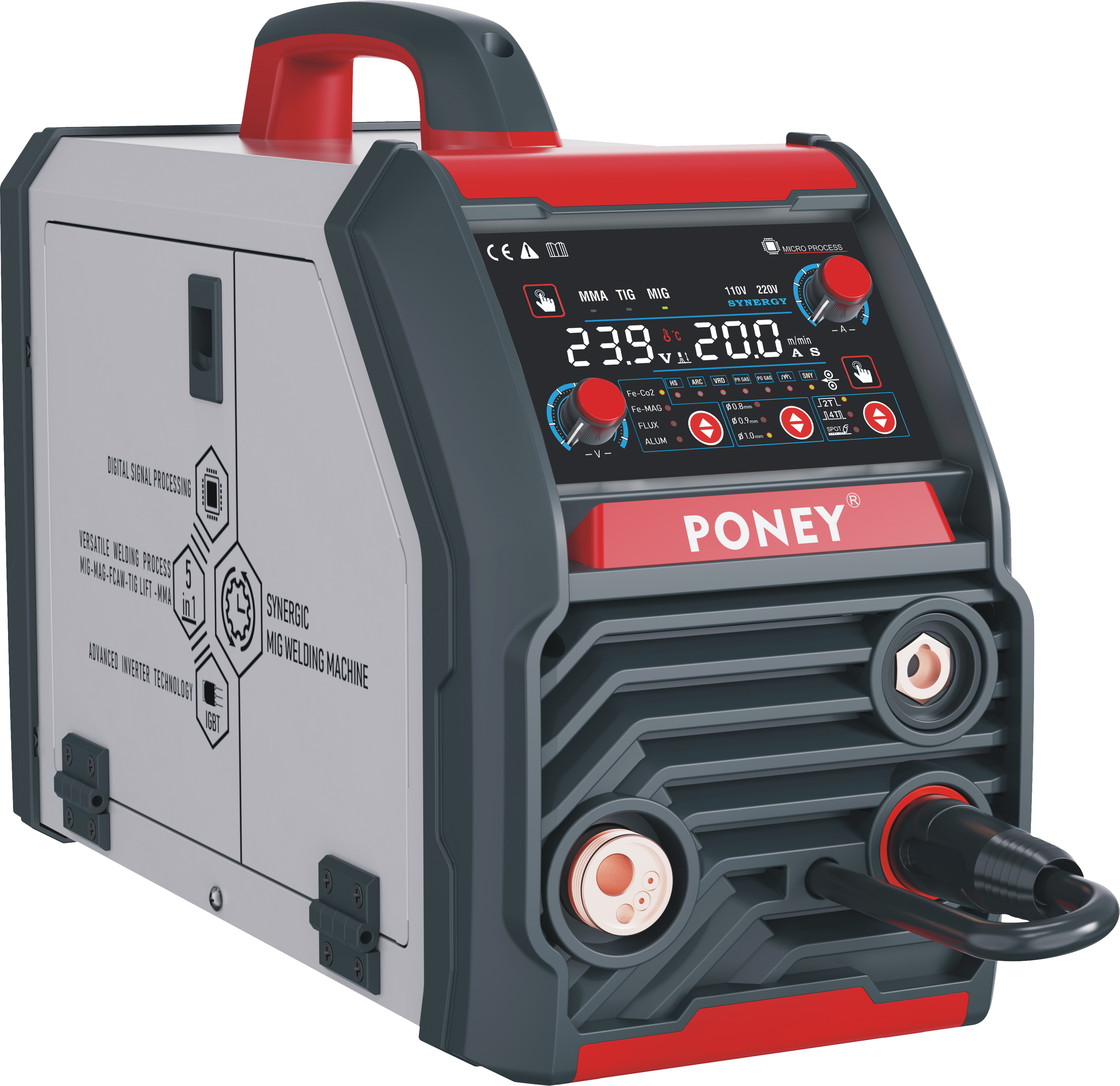
Precision fabrication environments demand welding systems that deliver consistent, high-quality results while maintaining strict control over heat input and material properties. In these demanding applications, traditional continuous welding methods often fall short of meeting the exacting standards required for aerospace components, medical devices, and high-performance industrial equipment. The need for superior arc stability, reduced spatter, and precise penetration control has led many fabrication facilities to adopt advanced welding technologies that can meet these stringent requirements.
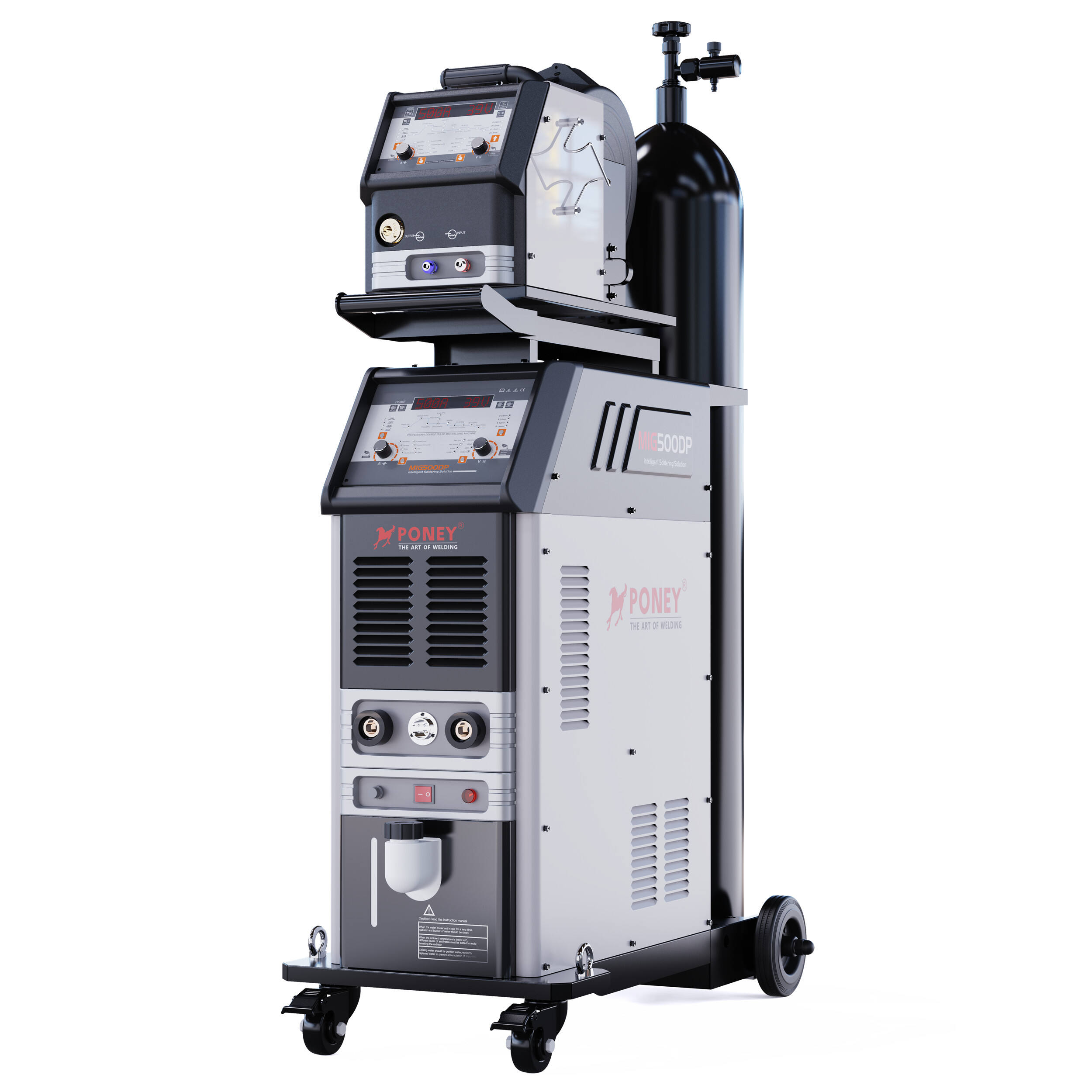
The pulse mig welder has emerged as the preferred solution for precision fabrication work because it addresses these critical challenges through innovative current modulation technology. By alternating between high peak currents for penetration and low background currents for cooling, pulse mig welder systems provide fabricators with unprecedented control over the welding process. This technology enables precise heat management, superior material flow, and exceptional weld quality that meets the demanding specifications of precision manufacturing environments.
Superior Heat Control and Material Management
Controlled Heat Input for Sensitive Materials
Precision fabrication often involves working with heat-sensitive materials that require careful thermal management to prevent distortion, grain structure changes, or mechanical property degradation. The pulse mig welder excels in these applications by providing controlled heat input through its pulsed current delivery system. During the high-current pulse phase, the system delivers sufficient energy for proper penetration and fusion, while the low-current background phase allows for controlled cooling and solidification.
This controlled thermal cycle is particularly beneficial when working with thin-section materials, aluminum alloys, and stainless steels commonly used in precision applications. The pulse mig welder reduces the overall heat-affected zone compared to conventional welding methods, preserving the base material's mechanical properties and minimizing post-weld distortion. This capability is essential in precision fabrication where dimensional accuracy and material integrity are paramount.
The ability to precisely control heat input also enables fabricators to work on complex assemblies where excessive heat could damage nearby components or compromise assembly tolerances. In electronic enclosures, medical device housings, and aerospace structures, the pulse mig welder provides the thermal control necessary to maintain tight manufacturing specifications throughout the welding process.
Enhanced Material Flow and Fusion Characteristics
The pulsed current waveform of a pulse mig welder creates unique material flow characteristics that contribute to superior weld quality in precision applications. During each pulse cycle, the high current phase creates a controlled droplet transfer that promotes consistent fusion and penetration patterns. This controlled transfer mechanism results in smoother weld profiles, reduced porosity, and improved mechanical properties in the finished weld.
In precision fabrication environments, these enhanced fusion characteristics translate to more predictable welding outcomes and reduced variability between welds. The pulse mig welder system maintains consistent arc characteristics regardless of welding position or joint configuration, enabling fabricators to achieve repeatable results across complex geometries and varying material thicknesses.
The improved material flow also contributes to better gap bridging capabilities, allowing fabricators to maintain consistent weld quality even when dealing with fit-up variations that are common in precision assemblies. This capability reduces the need for extensive pre-weld preparation and enables more efficient production workflows in demanding fabrication environments.
Arc Stability and Weld Quality Benefits
Consistent Arc Characteristics Under Varying Conditions
Precision fabrication environments often require welding in challenging positions, on varying material thicknesses, and across different joint configurations within the same assembly. The pulse mig welder maintains exceptional arc stability under these varying conditions through its advanced current control algorithms and precise timing mechanisms. This stability is crucial for achieving consistent penetration profiles and maintaining uniform weld appearance across complex fabrications.
The pulsed current delivery system inherently provides better arc starting characteristics and maintains stable operation even at low current settings required for thin material applications. This stability eliminates common welding defects such as cold starts, incomplete fusion, and irregular penetration patterns that can compromise the integrity of precision fabricated components.
In multi-pass welding applications common in thick-section precision work, the pulse mig welder maintains consistent inter-pass characteristics, ensuring proper fusion between weld layers and eliminating defects that could affect the structural integrity of critical components. This consistency is essential for meeting strict quality standards in aerospace, medical, and high-performance industrial applications.
Reduced Spatter and Post-Weld Cleanup Requirements
The controlled droplet transfer mechanism inherent in pulse mig welder technology significantly reduces spatter generation compared to conventional welding processes. This reduction in spatter is particularly valuable in precision fabrication environments where post-weld cleanup time directly impacts production efficiency and where spatter contamination can affect subsequent manufacturing processes such as coating, finishing, or assembly operations.
Lower spatter levels also contribute to improved workplace safety and cleaner working conditions, factors that are increasingly important in modern precision fabrication facilities. The reduced need for extensive spatter removal also minimizes the risk of damaging sensitive surfaces or precision-machined features during post-weld cleanup operations.
In applications where welded components undergo subsequent precision machining or surface treatment processes, the cleaner welds produced by pulse mig welder systems reduce contamination risks and improve the reliability of downstream operations. This benefit translates to improved overall production efficiency and reduced quality-related rework costs.
Process Control and Repeatability Advantages
Programmable Parameters for Consistent Results
Modern pulse mig welder systems incorporate advanced digital controls that enable precise programming of pulse frequency, current levels, and timing parameters. This programmability is essential in precision fabrication environments where repeatability and traceability are critical quality requirements. Fabricators can develop and store specific parameter sets for different material combinations, thicknesses, and joint configurations, ensuring consistent results across production runs.
The ability to precisely control pulse parameters also enables optimization for specific application requirements. For instance, high-frequency pulsing can be used for improved arc stability on thin materials, while lower frequency settings may be optimal for deeper penetration applications. This flexibility allows fabricators to tailor the welding process to meet exact specifications for each component or assembly.
Digital parameter storage and recall capabilities also support quality management systems by providing complete traceability of welding parameters used for specific components. This documentation capability is essential for meeting certification requirements in regulated industries such as aerospace, nuclear, and medical device manufacturing.
Reduced Operator Skill Dependencies
The inherent stability and controllability of pulse mig welder systems reduce the dependency on operator skill level for achieving consistent weld quality. While skilled operators remain important for setup and monitoring, the advanced process control capabilities of these systems help maintain consistent results even when different operators are involved in the welding process.
This reduced skill dependency is particularly valuable in precision fabrication environments where maintaining consistent quality standards across multiple shifts and operators is essential. The pulse mig welder technology helps standardize welding outcomes and reduces variability that can occur due to differences in operator technique or experience levels.
The self-regulating nature of pulsed current delivery also provides better tolerance for minor variations in travel speed, torch angle, and standoff distance, making it easier to maintain consistent weld quality even in complex joint geometries or challenging welding positions common in precision fabrication work.
Economic and Productivity Benefits
Reduced Rework and Quality-Related Costs
The superior process control and weld quality characteristics of pulse mig welder systems translate directly into reduced rework rates and lower quality-related costs in precision fabrication environments. The consistent penetration profiles, reduced defect rates, and improved dimensional stability of pulsed welds minimize the need for repair welding or component replacement due to welding-related quality issues.
In high-value precision fabrication applications, the cost of rework or component replacement can be substantial, making the improved first-pass success rates achieved with pulse mig welder technology a significant economic advantage. The reduced variability in weld quality also contributes to more predictable production schedules and improved on-time delivery performance.
The enhanced process control capabilities also enable fabricators to work closer to design limits with greater confidence, potentially reducing material usage and component weight while maintaining required safety margins. This capability is particularly valuable in aerospace and automotive applications where weight reduction directly impacts performance and operating costs.
Improved Production Efficiency and Throughput
The faster travel speeds and reduced cleanup requirements possible with pulse mig welder systems contribute to improved overall production efficiency in precision fabrication environments. The stable arc characteristics enable operators to maintain higher welding speeds while achieving the required quality standards, reducing cycle times for individual components and assemblies.
The reduced spatter generation and cleaner weld profiles minimize post-weld cleanup time, allowing fabricators to move more quickly to subsequent operations such as inspection, machining, or finishing processes. This time savings accumulates significantly over high-volume production runs and contributes to improved facility utilization and throughput.
The programmable parameter capabilities of modern pulse mig welder systems also reduce setup time when switching between different components or material specifications, enabling more flexible production scheduling and improved response to changing customer requirements in precision fabrication markets.
FAQ
What makes pulse mig welders more suitable for thin material applications than conventional welders?
Pulse mig welders excel with thin materials because their pulsed current delivery provides controlled heat input that prevents burn-through and distortion. The low background current phase allows materials to cool between pulses, while the high-current pulse phase ensures proper penetration and fusion. This thermal management capability is essential when working with the thin-section materials commonly used in precision fabrication applications.
How do pulse mig welders improve weld quality consistency in production environments?
Pulse mig welders improve consistency through programmable digital controls that maintain precise current parameters, timing, and frequency settings across all welds. The inherent arc stability and controlled droplet transfer reduce variability caused by operator technique differences or environmental factors. This results in more uniform penetration profiles, consistent weld appearance, and predictable mechanical properties throughout production runs.
Can pulse mig welders handle the material variety typically found in precision fabrication work?
Yes, pulse mig welders are highly versatile and can effectively weld the wide range of materials used in precision fabrication, including aluminum alloys, stainless steels, carbon steels, and exotic alloys. The adjustable pulse parameters allow optimization for each material type and thickness combination, while the controlled heat input prevents damage to heat-sensitive materials commonly used in precision applications.
What cost benefits can fabricators expect when switching to pulse mig welder technology?
Fabricators typically see cost benefits through reduced rework rates, faster welding speeds, decreased post-weld cleanup time, and lower consumable usage due to reduced spatter. The improved first-pass success rates minimize expensive repairs or component replacement, while the enhanced process control enables working closer to design specifications with greater confidence. These benefits compound over time, resulting in significant improvements in overall production profitability.
Table of Contents
- Superior Heat Control and Material Management
- Arc Stability and Weld Quality Benefits
- Process Control and Repeatability Advantages
- Economic and Productivity Benefits
-
FAQ
- What makes pulse mig welders more suitable for thin material applications than conventional welders?
- How do pulse mig welders improve weld quality consistency in production environments?
- Can pulse mig welders handle the material variety typically found in precision fabrication work?
- What cost benefits can fabricators expect when switching to pulse mig welder technology?