EN
EN

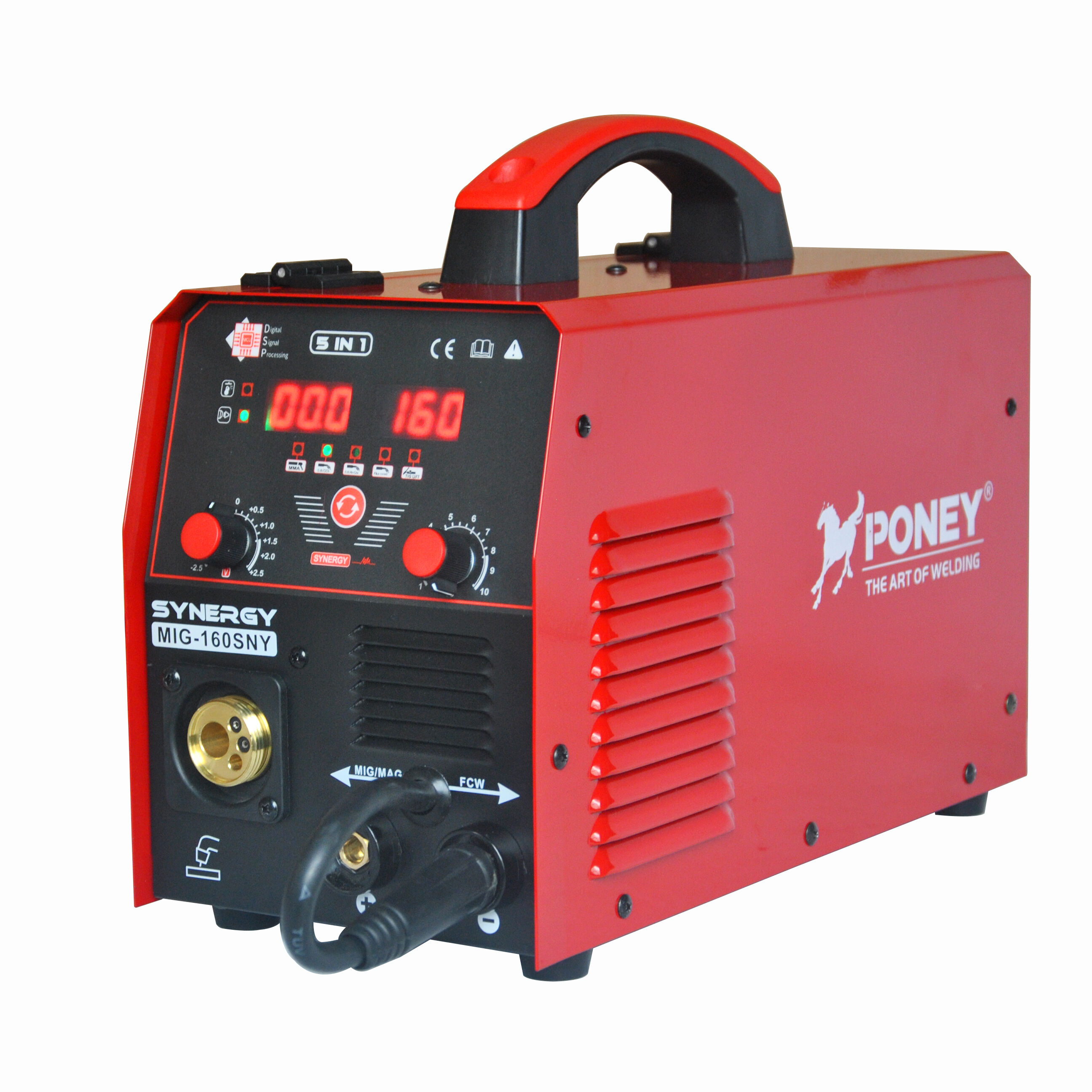
When operating a mig welder across different material thicknesses, welders encounter a complex set of challenges that can significantly impact weld quality, productivity, and overall project success. These challenges stem from the fundamental physics of metal joining, where varying thicknesses demand different heat input levels, penetration depths, and parameter adjustments that push even experienced operators to adapt their techniques constantly.
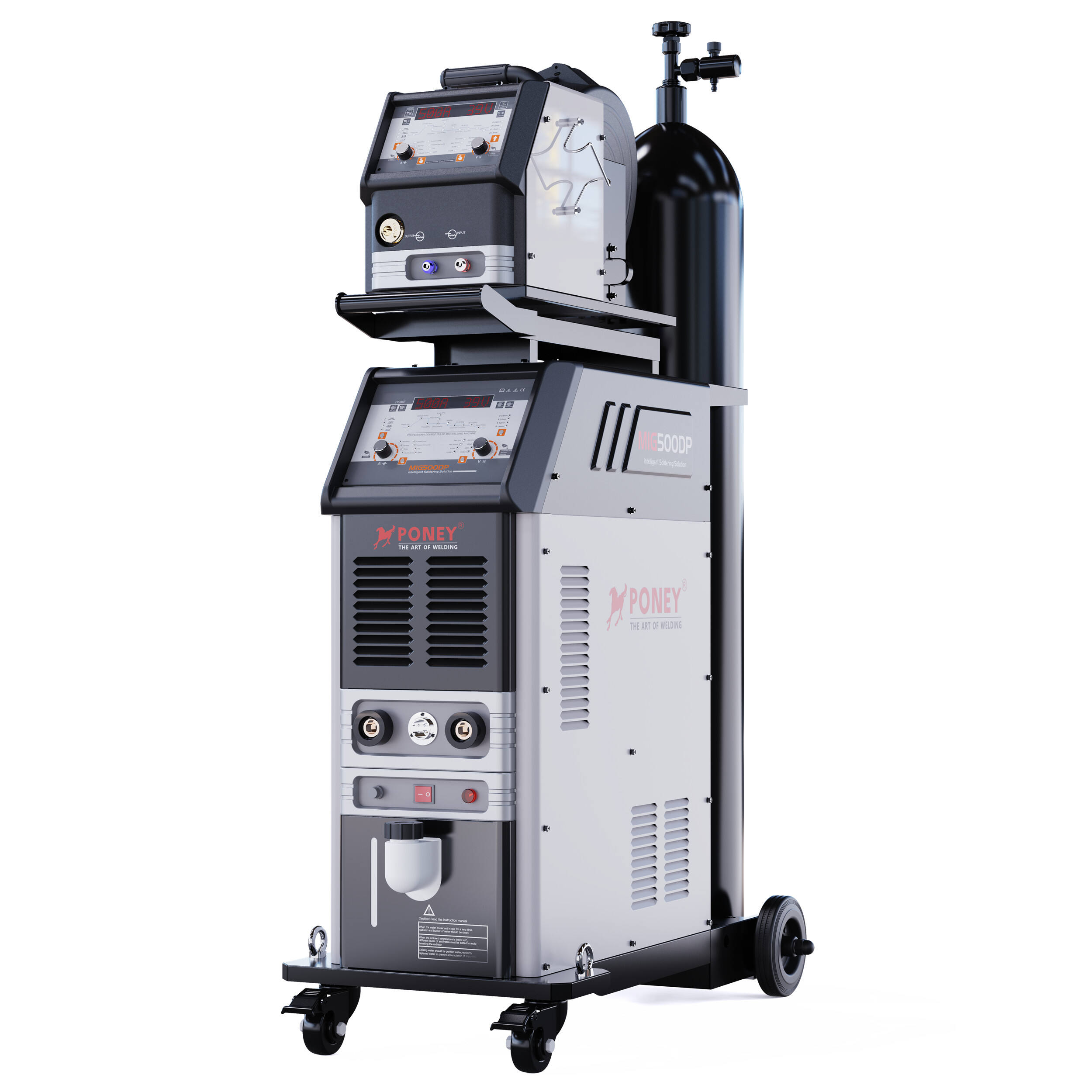
The complexity of handling varying material thicknesses with a mig welder becomes apparent when considering that each thickness change requires precise recalibration of multiple welding parameters simultaneously. From wire feed speed adjustments to voltage modifications and travel speed alterations, the mig welder operator must navigate a intricate balance of variables while maintaining consistent weld quality across the entire joint. Understanding these challenges helps welders prepare better strategies and equipment selections for multi-thickness welding projects.
Heat Input Management Complications
Thermal Distribution Issues Across Different Thicknesses
When a mig welder operates on materials with varying thicknesses, heat distribution becomes critically uneven, creating significant challenges in achieving consistent penetration. Thicker sections act as heat sinks, rapidly drawing thermal energy away from the weld zone, while thinner sections heat up quickly and risk burn-through. This thermal imbalance forces the mig welder operator to constantly adjust parameters, often leading to compromised weld quality in transition zones where different thicknesses meet.
The mig welder must compensate for these thermal variations by modifying travel speed, amperage, and voltage settings continuously throughout the welding process. Thicker materials require higher heat input to achieve proper penetration, but this same heat level can cause excessive melting or distortion in adjacent thinner sections. This creates a narrow operating window where the mig welder parameters must be precisely controlled to avoid defects on either side of the thickness transition.
Professional welders often encounter situations where the heat affected zone extends differently across varying thicknesses, leading to inconsistent grain structure and mechanical properties. The mig welder arc behavior changes as it moves from thick to thin sections, requiring immediate parameter adjustments that many operators struggle to execute smoothly. These thermal management challenges become more pronounced in structural welding applications where strength requirements are critical.
Preheating Requirements and Complications
Varying material thicknesses create complex preheating requirements that challenge even experienced mig welder operators. Thick sections often require substantial preheating to achieve proper fusion, while thin sections may need no preheating or even cooling measures to prevent overheating. This creates logistical difficulties in maintaining appropriate temperatures across the entire weld joint simultaneously.
The mig welder operator must consider that preheating thick sections to the required temperature can inadvertently overheat adjacent thin materials, leading to distortion or metallurgical changes. Temperature gradients across the workpiece become difficult to manage, especially when the mig welder must maintain specific interpass temperatures for code compliance. These thermal management challenges require careful planning and monitoring throughout the welding process.
Industrial applications often involve complex geometries where different thicknesses are located in close proximity, making uniform preheating nearly impossible. The mig welder setup must account for these variations through strategic heating patterns, insulation techniques, and temperature monitoring systems. Failure to properly manage preheating across varying thicknesses can result in cold cracking, incomplete fusion, or excessive distortion that compromises the structural integrity of the finished weldment.
Parameter Adjustment Complexities
Wire Feed Speed Optimization Challenges
Managing wire feed speed becomes significantly more complex when a mig welder handles varying material thicknesses within a single weld joint. Thick sections require higher wire feed speeds to provide adequate filler metal deposition and maintain proper penetration, while thin sections need reduced feed speeds to prevent excessive buildup and burn-through. This constant adjustment requirement challenges the operator's ability to maintain smooth, consistent welding technique.
The mig welder must coordinate wire feed speed changes with simultaneous adjustments to travel speed and arc voltage to maintain stable arc characteristics. When transitioning from thick to thin materials, improper wire feed speed can cause the arc to become unstable, leading to spatter, porosity, or incomplete fusion. These parameter interactions become more critical in production welding where consistency and efficiency are paramount.
Modern mig welder equipment offers programmable parameter sets, but operators still face challenges in timing these transitions correctly. The delay between parameter changes and their effect on the weld pool requires experienced judgment to execute successfully. In automated welding systems, programming these transitions becomes a complex engineering task that requires extensive testing and validation to ensure reliable performance across all thickness variations.
Voltage and Amperage Balancing Issues
Achieving proper voltage and amperage balance across varying material thicknesses presents ongoing challenges for mig welder operations. Thick materials demand higher amperage levels to achieve adequate penetration and fusion, while maintaining appropriate voltage to control arc length and weld bead profile. However, these same settings can cause excessive melting and distortion when the mig welder encounters thinner sections of the joint.
The relationship between voltage and amperage becomes more complex when dealing with thickness variations because the electrical characteristics of the arc change as heat dissipation patterns shift. Thicker materials provide more thermal mass, allowing higher energy inputs, while thin sections quickly reach melting temperatures with lower energy requirements. This necessitates real-time parameter adjustments that test the operator's skill and equipment capabilities.
Professional mig welder operators often develop specific techniques for managing these electrical parameter challenges, including strategic pause-and-cool periods, modified weaving patterns, and careful attention to arc sound and visual cues. The complexity increases in multi-pass welding scenarios where each pass may encounter different effective thicknesses due to previous weld metal deposition. These electrical balancing challenges require both technical knowledge and practical experience to master effectively.
Penetration and Fusion Difficulties
Inconsistent Joint Penetration Problems
Achieving consistent penetration across varying material thicknesses represents one of the most significant challenges facing mig welder operators. Thick sections require deep penetration to ensure proper fusion throughout the material cross-section, while thin sections can experience complete burn-through with the same parameter settings. This creates situations where parts of the weld joint may have inadequate penetration while other areas suffer from excessive melting.
The mig welder arc behavior changes dramatically as it encounters different material thicknesses, affecting how effectively the heat energy penetrates into the base metal. Thick materials absorb and dissipate heat quickly, requiring sustained high-energy input to achieve full penetration. Conversely, thin materials heat rapidly and can lose structural integrity if exposed to the same energy levels needed for thick section penetration.
Visual inspection of penetration becomes more challenging when dealing with varying thicknesses because traditional indicators may not accurately reflect the fusion quality throughout the joint. The mig welder operator must rely on advanced techniques such as real-time monitoring systems, destructive testing protocols, or non-destructive evaluation methods to verify adequate penetration across all thickness variations. These additional verification requirements increase project complexity and costs significantly.
Fusion Zone Control Complications
Controlling the fusion zone characteristics becomes increasingly difficult when a mig welder operates across materials of varying thicknesses. The size and shape of the fusion zone must be optimized for each thickness while maintaining compatibility with adjacent sections of different dimensions. This requires precise control over heat input distribution and cooling rates throughout the welding process.
Different material thicknesses create varying cooling rates that affect the solidification pattern and grain structure within the fusion zone. The mig welder parameters must be adjusted to account for these metallurgical considerations while still achieving the required mechanical properties. Rapid cooling in thin sections can lead to hard, brittle microstructures, while slow cooling in thick sections may result in coarse grain formation that reduces toughness.
Industrial applications often require specific fusion zone characteristics to meet performance standards, making thickness variation management even more critical. The mig welder operator must understand how different cooling rates affect the final weld properties and adjust techniques accordingly. This may involve post-weld heat treatment considerations, specialized filler metal selection, or modified welding sequences to optimize fusion zone quality across all thickness variations.
Distortion and Stress Management
Differential Expansion and Contraction Issues
Varying material thicknesses create complex thermal expansion and contraction patterns that challenge effective distortion control during mig welder operations. Thick sections expand and contract more slowly than thin sections, creating internal stresses that can lead to warping, cracking, or dimensional instability in the finished weldment. These differential movements occur throughout the heating and cooling cycles of the welding process.
The mig welder operator must anticipate these thermal movements and implement appropriate restraint or compensation techniques to minimize distortion. Pre-setting techniques, strongbacks, and strategic welding sequences become essential tools for managing the complex stress patterns that develop across thickness transitions. Understanding the thermal properties of different material thicknesses helps predict distortion patterns and develop effective mitigation strategies.
Residual stress distribution becomes highly irregular when varying thicknesses are involved, creating potential failure points in service loading conditions. The mig welder process must be carefully planned to balance thermal input with mechanical restraint to achieve acceptable distortion levels. Post-weld stress relief procedures may require modification to address the non-uniform stress patterns created by thickness variations throughout the weldment.
Fixture and Clamping Challenges
Developing effective fixture and clamping strategies for mig welder operations becomes significantly more complex when dealing with varying material thicknesses. Different thicknesses require different levels of restraint to control distortion, but applying uniform clamping pressure across varying sections can create stress concentrations or inadequate support in critical areas. This requires careful fixture design that accommodates thickness variations while providing appropriate restraint.
The mig welder setup must account for the different thermal expansion characteristics of varying thicknesses when designing clamping systems. Rigid fixtures may create excessive stresses in thin sections while providing inadequate restraint for thick sections that generate higher thermal forces. Flexible clamping systems or segmented fixtures often become necessary to accommodate these varying requirements effectively.
Access for the mig welder torch and operator visibility can be compromised by complex fixturing required for thickness variation management. The clamping system must balance distortion control with practical welding considerations such as torch angle, travel direction, and joint accessibility. These competing requirements often necessitate custom fixture solutions that increase setup time and project costs significantly.
Quality Control and Inspection Challenges
Non-Destructive Testing Limitations
Implementing effective non-destructive testing procedures becomes more challenging when mig welder operations involve varying material thicknesses. Standard inspection techniques may not provide adequate sensitivity across all thickness ranges within a single weld joint. Ultrasonic testing, for example, requires different probe selections and calibration settings for different thicknesses, making comprehensive evaluation more complex and time-consuming.
The mig welder quality assurance protocols must account for the different defect types and locations that can occur in varying thickness applications. Thin sections are more susceptible to burn-through and lack of fusion, while thick sections face risks of incomplete penetration and internal porosity. This requires multiple inspection approaches and acceptance criteria that address the specific challenges of each thickness range.
Radiographic inspection of varying thicknesses creates exposure and interpretation challenges that can mask defects or create false indications. The mig welder quality control program must incorporate appropriate techniques and personnel training to ensure reliable defect detection across all thickness variations. Advanced inspection methods such as phased array ultrasonics or computed tomography may be required for critical applications involving significant thickness variations.
Documentation and Traceability Complexities
Maintaining proper documentation and traceability becomes more involved when mig welder operations span multiple material thicknesses within single weld joints. Each thickness range may require different welding procedures, parameter settings, and quality requirements that must be accurately recorded and verified. This creates additional administrative burden and potential for documentation errors that could affect quality assurance compliance.
The mig welder operation records must capture the specific parameters used for each thickness section while maintaining clear traceability to inspection results and acceptance criteria. Automated data logging systems may struggle with the parameter variations required for thickness changes, necessitating more sophisticated monitoring and recording equipment. Manual documentation systems become prone to errors when frequent parameter changes are required.
Certification and code compliance verification becomes more complex when varying thicknesses are involved because different sections may fall under different qualification requirements. The mig welder procedures must address these variations while maintaining clear documentation trails that demonstrate compliance with all applicable standards. This often requires multiple procedure qualifications and more detailed work instructions that address specific thickness transition techniques.
FAQ
What is the most common defect when a mig welder handles varying material thicknesses?
The most common defect is inconsistent penetration, where thick sections may have insufficient fusion while thin sections experience burn-through or excessive melting. This occurs because the mig welder parameters optimized for one thickness are inappropriate for another, creating a challenging balance that requires constant adjustment and skilled technique to manage effectively.
How can operators minimize distortion when welding materials of different thicknesses?
Operators can minimize distortion by using strategic welding sequences, appropriate preheating patterns, and careful thermal management techniques. The mig welder setup should include proper fixturing designed for varying thicknesses, controlled heat input through parameter adjustment, and sometimes post-weld stress relief procedures to manage the complex thermal stresses created by thickness variations.
Why do mig welder parameter adjustments become more critical with varying thicknesses?
Parameter adjustments become critical because different thicknesses have vastly different thermal properties and heat dissipation rates. The mig welder must provide adequate energy for penetration in thick sections while avoiding overheating in thin sections, requiring precise control over voltage, amperage, wire feed speed, and travel speed to maintain weld quality throughout the joint.
What inspection challenges arise when checking welds made across varying material thicknesses?
Inspection challenges include the need for multiple testing techniques, different acceptance criteria for each thickness range, and potential masking effects in radiographic or ultrasonic testing. The mig welder quality control program must address these variations with appropriate inspection methods, calibration procedures, and personnel training to ensure reliable defect detection across all thickness ranges within the weld joint.
Table of Contents
- Heat Input Management Complications
- Parameter Adjustment Complexities
- Penetration and Fusion Difficulties
- Distortion and Stress Management
- Quality Control and Inspection Challenges
-
FAQ
- What is the most common defect when a mig welder handles varying material thicknesses?
- How can operators minimize distortion when welding materials of different thicknesses?
- Why do mig welder parameter adjustments become more critical with varying thicknesses?
- What inspection challenges arise when checking welds made across varying material thicknesses?